




 Home
Home Shop
Shop About Siribele Natural
 Blogs
Blogs Contact
What Did Indians Eat 2,000 Years Ago?
Posted by : Siribele Natural On : 15 Sep 2026
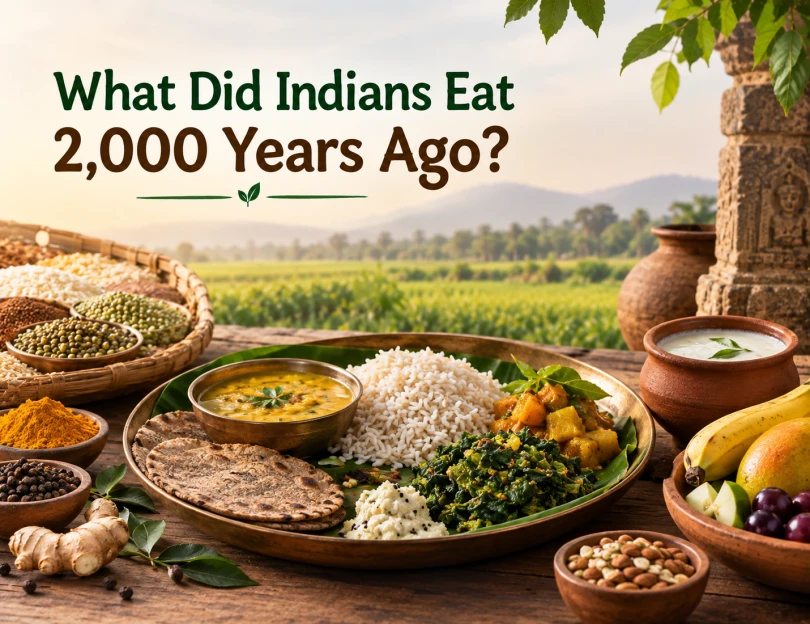
Have you ever wondered what an Indian meal looked like 2,000 years ago?
There was, of course, no single “Indian diet.” Food varied greatly depending on the region, climate, crops and season.
But traditional Indian food had one important characteristic:
It was closely connected to the land and the seasons.
🌾 Grains Were the Foundation
Rice was an important staple in many parts of India, while millets and other grains were more common in regions where they suited the local climate.
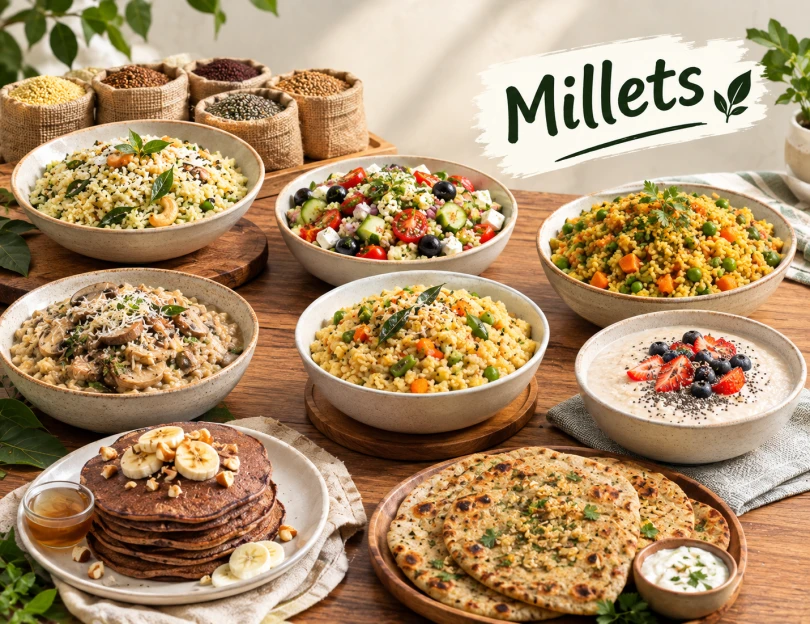
Ragi, jowar, bajra, barley and other traditional grains provided energy and variety.
The grain on the plate often reflected what could naturally be grown in that region.
🌱 Pulses Were an Important Part of the Meal
Different dals and legumes such as moong, urad, toor and chickpeas were used in traditional cooking.
A simple combination of grain + dal provided an inexpensive and nourishing meal.
This basic combination remains an important part of Indian food even today.
🥬 Vegetables Followed the Seasons
There were no supermarkets bringing vegetables from across the country throughout the year.
People largely ate what was available locally and seasonally.
Gourds, leafy greens, roots, tubers and other regional vegetables formed an important part of traditional meals.
This naturally created variety throughout the year.
🌿 What About Spices?
Indian cooking already had a rich spice tradition thousands of years ago.
Black pepper, long pepper, ginger, cumin, coriander, mustard and turmeric were among the ingredients used for flavour and cooking.
Interestingly, chilli peppers were not originally native to India. They arrived much later, after the Portuguese introduction of chillies in the 16th century.
So the Indian cuisine we know today is itself the result of centuries of change.
🍌 Fruits and Natural Sweeteners
Seasonal fruits such as mango, banana, jackfruit, amla and jamun were part of traditional food cultures in different regions.
Jaggery and honey were also traditional sources of sweetness.
Again, season and availability mattered.
🌾 What Can We Learn From This Today?
We shouldn't assume that everything people ate 2,000 years ago was automatically healthier.
But traditional food systems offer some useful lessons:
Eat more seasonal foods
Include a variety of grains and pulses
Eat different local vegetables
Reduce dependence on highly processed foods
Understand where our food comes from
Respect regional food traditions
Perhaps the biggest difference is that food was once much more closely connected to the farm, the season and the local environment.
Today, almost every food is available throughout the year.
So perhaps we should ask ourselves:
Do we know what we are eating, where it came from and how it was grown?
Food is more than something we buy from a shelf.
 Login
Login